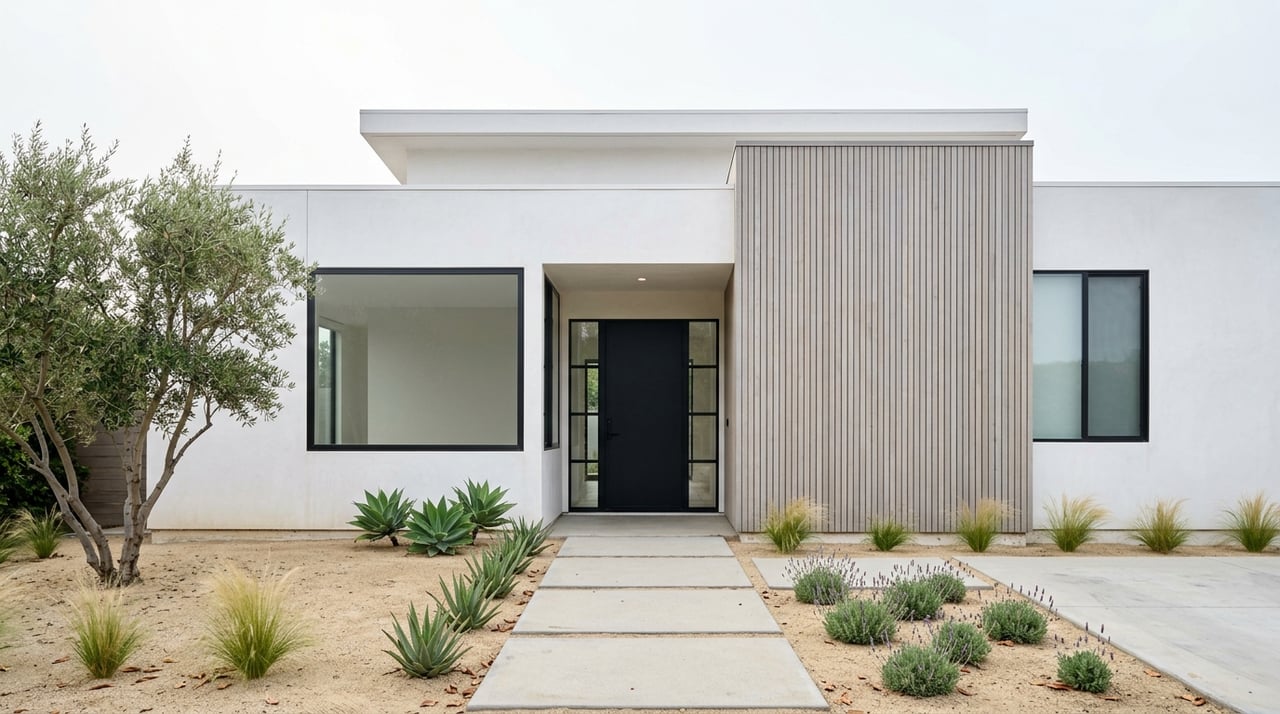
Moving From Los Angeles to Ventura County: Why Buyers Make the Move
May 7, 2026
May 7, 2026
If you have outgrown your Los Angeles home but do not want to leave Southern California behind, Ventura County is likely already on your radar. Many move-up buyers are drawn by the idea of more breathing room, a quieter daily rhythm, and strong outdoor access without giving up the coastal California lifestyle. The key is knowing what Ventura County truly offers, and what it does not. Let’s dive in.
For many Los Angeles buyers, Ventura County feels like a reset. It is simply less dense, which can shape everything from traffic to neighborhood feel to how much open space you notice in everyday life.
In 2024, Ventura County had about 835,427 residents and 458.4 people per square mile. Los Angeles County, by comparison, had about 9,757,179 residents and 2,466.9 people per square mile. That difference helps explain why Ventura County often feels more spacious and less crowded.
Commute patterns also support that lifestyle shift. Mean travel time to work was 25.6 minutes in Ventura County versus 30.4 minutes in Los Angeles County. That does not guarantee an easier commute for every household, but it does help tell the broader story of a different day-to-day pace.
Another telling data point is ownership. Ventura County had a 64.6% owner-occupied housing rate, compared with 45.9% in Los Angeles County. For move-up buyers, that can translate into a more residential feel and a market where ownership plays a bigger role in the local housing mix.
This is one of the most important points to understand before you make a move. Ventura County may offer a different housing experience, but it is not best described as a low-cost alternative to Los Angeles County.
The median value of owner-occupied housing units was $822,700 in Ventura County and $834,200 in Los Angeles County. Median selected monthly owner costs with a mortgage were also very close, at $3,105 in Ventura County versus $3,160 in Los Angeles County. In other words, the financial difference at the county level is not dramatic.
Rents tell a similar story. Median gross rent was $2,317 in Ventura County, compared with $1,954 in Los Angeles County. If you are expecting Ventura County to be the obvious budget option, the data does not really support that.
What Ventura County may offer instead is value through lifestyle. You may find a more space-oriented setting, a stronger ownership feel, and communities shaped by open land, coastal access, and suburban patterns rather than constant density.
Part of Ventura County’s appeal is tied to the fact that it has protected large areas of open space and farmland. The SOAR initiative has helped limit development to urban boundaries, which supports the county’s less crowded character.
That same framework also helps explain why housing supply can stay tight. When growth is more constrained, buyers may have fewer options at any given time, especially in established neighborhoods and higher-demand submarkets.
This matters for move-up buyers because a more open-feeling county does not always mean an easier home search. You may gain lifestyle advantages, but you still need a clear plan for how to compete and how to evaluate value.
Recent market data shows a useful middle ground for buyers. SCAG reported that the median selling price of all homes sold in Ventura County during the first eight months of 2025 was $947,000.
Sales were 1% higher than in 2024, and inventory was up 43% year over year. That combination points to a market where prices remain high, but buyers may have more choice than they did a year earlier.
For move-up buyers coming from Los Angeles, that could mean a better chance to compare neighborhoods, property styles, and lot sizes without feeling quite as boxed in. It is still a competitive, high-value market, but not necessarily as restrictive as it was in the recent past.
Ventura County’s move-up appeal is often strongest outside the pricing conversation. Buyers are often responding to how the county lives, not just how it looks on a spreadsheet.
The county offers broad outdoor access through beach-front parks, inland parks, trails, golf courses, and dog parks. One standout example is the Ojai Valley Trail, which runs from Foster Park in Ventura to Soule Park Golf Course in Ojai.
The coastal setting is also a major draw. Ventura Harbor is home to the mainland visitor center for Channel Islands National Park, and access to the islands is by park concessionaire boat or private boat. Ventura County’s harbor system also supports recreational boating and sportfishing, which adds a distinct coastal dimension to daily life.
State park access strengthens that appeal. Point Mugu State Park includes five miles of shoreline, sandy beaches, rocky bluffs, sand dunes, rugged hills, two major river canyons, and more than 70 miles of hiking trails. Emma Wood State Beach offers swimming, surfing, fishing, camping, and Channel Islands views, while McGrath State Beach is known for bird-watching.
Not every part of Ventura County feels the same, and that is good news for move-up buyers. The county gives you several distinct settings to compare depending on how you want to live.
Ventura, Oxnard, and Port Hueneme are natural starting points if you want stronger ties to the beach, harbor access, or a more coastal day-to-day environment. These areas are also the easiest places to think about property options such as condos, beach-close homes, and harbor-adjacent living.
If your move-up goal includes being closer to the water or leaning into recreation and coastal access, these communities deserve a close look. The experience is different from inland Los Angeles suburbs, even when pricing remains elevated.
Thousand Oaks, Newbury Park, Camarillo, Moorpark, and Simi Valley often appeal to buyers who want more of a suburban layout and a housing mix that leans toward detached single-family homes. These areas are also useful for buyers who want to compare lot sizes, neighborhood layouts, and newer housing opportunities.
SCAG reported that Oxnard and Camarillo led Ventura County in new housing starts through 2024. It also noted that 2025 apartment permits were concentrated in Oxnard, Camarillo, and Santa Paula, while Moorpark’s Hitch Ranch plan includes 456 single-family homes and 299 multifamily units, and North Ranch is expected to add more single-family detached housing.
That pipeline matters because move-up buyers are often looking for the next step in space, layout, and long-term fit. Newer inventory and planned development can expand your choices in a county where land is still limited.
Ojai, Santa Paula, Fillmore, and the county’s more rural edges can appeal to buyers who prioritize trails, open space, and a more tucked-away setting. These areas are where buyers often start thinking about larger lots, more privacy, or occasional acreage-oriented properties.
This is not a formal market category, but it is a practical way to think about how Ventura County lives. If your move-up plan is less about square footage alone and more about space around you, inland areas may deserve serious attention.
For many move-up buyers, school research is part of narrowing the map. Ventura County gives you multiple district options to compare, and the strongest approach is to use official, transparent data.
The Ventura County Office of Education directs parents to the California School Dashboard and DataQuest for information such as graduation, dropout, suspension, and chronic absenteeism measures. That gives you a clear framework for research without relying on general impressions.
Districts that buyers commonly compare include Ventura Unified, Moorpark Unified, Oak Park Unified, and Conejo Valley Unified. California Department of Education district profiles list Ventura Unified enrollment at 14,035 for 2025-26 and Moorpark Unified at 5,809, while the state directory identifies Oak Park Unified in Oak Park and Conejo Valley Unified in Thousand Oaks and Newbury Park.
The takeaway is simple. Ventura County offers multiple district ecosystems and strong public data transparency, which can help you compare locations more confidently as part of your move-up search.
If you are leaving Los Angeles for Ventura County, it helps to go in with the right expectations. The smartest move-up decisions usually come from matching your priorities to the right submarket, not from chasing a bargain that may not really exist.
Here are a few practical questions to ask yourself:
When you answer those questions honestly, Ventura County becomes easier to evaluate. It is often less about spending less and more about living differently.
Ventura County appeals to move-up buyers leaving Los Angeles because it offers a different kind of Southern California experience. It is less dense, more owner-occupied, and shaped by open-space preservation, coastal access, and a broader range of outdoor amenities.
At the same time, housing costs remain high and close to Los Angeles County levels, so this is not a simple affordability play. For many buyers, the real advantage is the chance to trade density for breathing room while staying connected to the lifestyle and regional access they value.
If you are weighing that move and want a clear, strategic view of how Ventura County compares to your current market, Ann Marie Luna can help you evaluate the options with precision and discretion.
Stay up to date on the latest real estate trends.






Ann Marie specializes in helping clients with luxury, investment, and/or distressed properties, offering fast and reliable services across Los Angeles, Ventura, Orange, and San Diego Counties. Contact her today to discuss your situation and prepare your property for sale.

2424 Huntington Drive San Marino, CA 91108