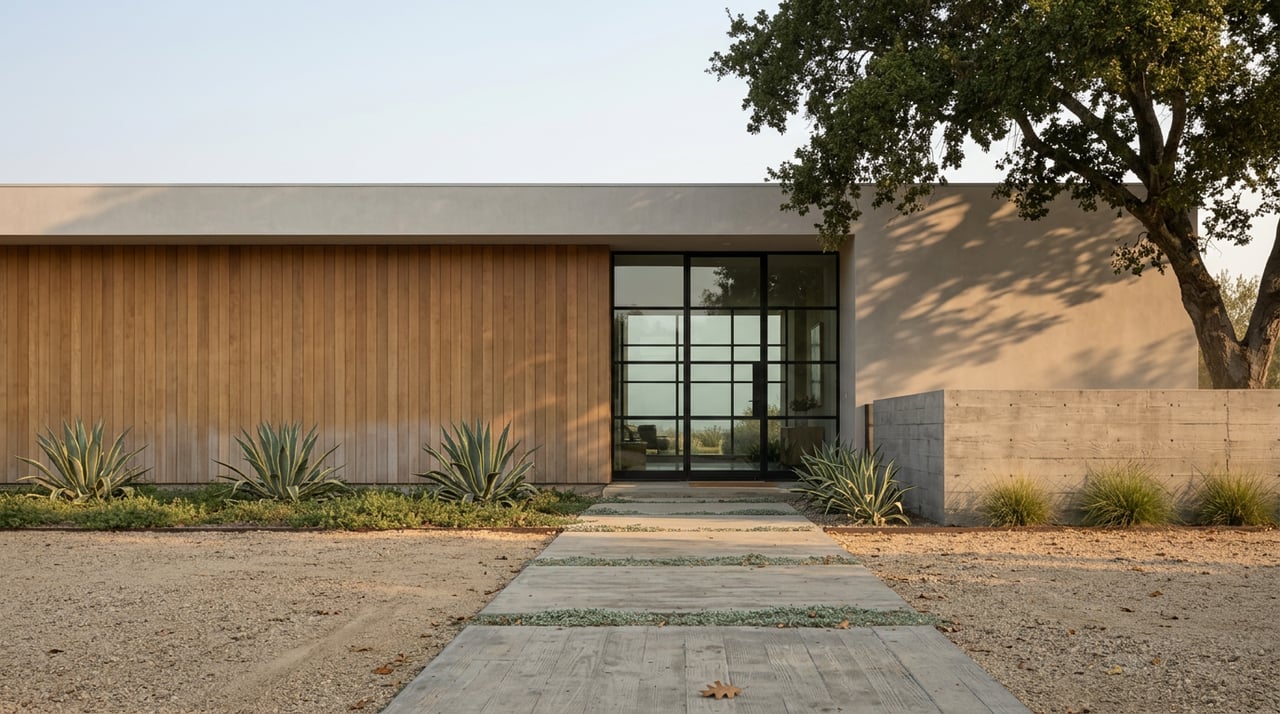
La Jolla vs Rancho Santa Fe Real Estate Explained
August 20, 2026
August 20, 2026
A client called me in early August with a screenshot from her phone. Rancho Santa Fe's median sale price had dropped nearly 22 percent over the past year. In the same report, the price per square foot had climbed almost 37 percent. She wanted to know which number was true. Was Rancho Santa Fe getting cheaper or more expensive?
The honest answer is that both numbers are true, and neither one is telling her what she thinks it is. That contradiction is the whole story if you're deciding between Rancho Santa Fe and La Jolla, San Diego County's two most prestigious addresses, and it explains something most comparison guides skip past: these aren't two prices for the same product. They're two different products, and the medians you're reading were never built to compare them.
Over the three months ending May 2026, Redfin's tracking showed Rancho Santa Fe's median sale price at $3.9 million, down 21.9 percent from the same period a year earlier. In that same window, the median price per square foot rose to $1,450, up 36.8 percent year over year. Thirteen homes sold in Rancho Santa Fe in May 2026, down from nineteen the year before.
Thirteen sales. That's the number that unlocks the puzzle.
When a market moves thirteen transactions in a month, the median isn't tracking appreciation or depreciation. It's tracking which thirteen specific houses happened to close. If a handful of smaller Rancho Santa Fe parcels sold that month instead of the sprawling Covenant estates that usually anchor the top of the range, the median price falls even though nothing about underlying values changed. Meanwhile the per-square-foot figure, calculated across whatever mix of homes did sell, moved in the opposite direction because those particular homes carried premium finishes or smaller footprints relative to their price.
Compare that to La Jolla, where the market has enough volume to average out noise. Industry reporting through June 2026 put La Jolla's months of supply at 3.58, tight enough to favor sellers, with properly priced homes in the most competitive pockets selling in under two weeks. Separate luxury-market reporting from that same period described La Jolla as the most liquid luxury market in the county, moving noticeably faster than Rancho Santa Fe. That liquidity is exactly what keeps La Jolla's median stable enough to trust. Rancho Santa Fe's low volume is what makes its median swing.
Here's a rough sense of what the four coastal and inland North County markets looked like in the same mid-2026 window, drawing from multiple market reports:
| Market | Typical Price Range (mid-2026) | Price per Sq Ft | What Drives It |
|---|---|---|---|
| Carmel Valley | $1.6M – $1.9M | ~$750 – $950 | Master-planned supply, strong commute access |
| Del Mar | $2.2M – $4M+ (beach-proximate often $5M+) | ~$1,200 – $1,800+ | Small incorporated footprint, tight supply |
| La Jolla | ~$2.5M – $4.5M+ in the competitive band | ~$1,368 (Jan–June 2026 median) | Land scarcity, ocean proximity, walkability |
| Rancho Santa Fe | Covenant estates from ~$3.5M into $10M+ | ~$850 – $1,400 | Two-acre minimum parcels, comp scarcity |
Notice the inversion. Rancho Santa Fe carries the highest total price of the four markets but one of the lowest per-square-foot figures, because you're paying for acreage, not square footage. La Jolla does the opposite: a smaller total price tag on paper, but among the steepest cost per square foot in the county, because you're paying for a location that can't be replicated inland.
Once you stop treating "luxury San Diego" as a single spectrum from cheap to expensive, the comparison gets easier. La Jolla sells proximity and liquidity. Rancho Santa Fe sells land and a more secluded setting.
Walk La Jolla's Village and you're within blocks of Prospect Street and Girard Avenue, the restaurant and gallery corridor that gives the neighborhood its walkable density. Coast Boulevard traces the bluffs above La Jolla Cove. La Jolla Shores draws families and kayakers to the widest swimmable stretch of beach in the area, while surfers head to Windansea a few minutes south. Sub-neighborhoods like La Jolla Farms, Muirlands, and Bird Rock each carry their own price tier and architectural character, from ultra-modern bluff-front estates to more traditional homes near the schools.
Drive into Rancho Santa Fe's Covenant and the experience changes immediately. Eucalyptus-lined lanes lead past two-acre minimum parcels where the community's design review board enforces a Spanish Colonial Revival and Mediterranean aesthetic to preserve its historic character. Life here centers on the private Rancho Santa Fe Golf Club and Tennis Club, both exclusive to Covenant homeowners, plus more than 60 miles of private equestrian and hiking trails. The commercial center is small by design. The Inn at Rancho Santa Fe and Mille Fleurs are the closest thing to a dining scene inside the Covenant itself. For anything beyond that, residents drive out to Del Mar, Solana Beach, or the Carmel Valley shopping centers.
That's not a lesser lifestyle. It's a different transaction entirely, and it shows up in financing.
The gap between "which market is more expensive" and "which market is harder to close" is where buyers get surprised.
In Del Mar, Coastal Commission review on anything touching the bluff can stall permitting long enough that conventional construction lenders won't commit to a timeline. Buyers planning to close on a rebuild lot before permits are pulled typically need financing structured around that delay from the start.
In Rancho Santa Fe, the friction is different. Comp scarcity is the rule on the Covenant's best streets, Paseo Delicias, Via de Santa Fe, and Linea del Cielo, where per-square-foot pricing regularly runs above $2,000. Non-conforming lot sizes and agricultural components on larger parcels routinely complicate conventional underwriting before it starts, because there simply aren't enough comparable recent sales to support a standard appraisal. This is the same thin-market dynamic that distorts the median, showing up again at the underwriting desk.
School structure is a practical logistics question worth understanding, not a quality comparison. La Jolla sits within San Diego Unified School District, offering a continuous public progression from elementary through high school. Rancho Santa Fe operates its own R-1 district for kindergarten through eighth grade, after which families typically combine that with a private school or a semi-distant public high school outside the Covenant. Neither structure is better. They're simply different commitments, and families should factor the transition point into their timeline the same way they'd factor in a commute.
Commute is its own line item. Carmel Valley residents reach Torrey Pines and Sorrento Valley biotech employers in ten to twenty minutes via I-5 or SR-56. Rancho Santa Fe's inland location and two-lane Covenant roads typically add fifteen to twenty-five minutes to the same trip. That difference matters most to households where someone commutes onsite multiple days a week.
If you're comparing La Jolla and Rancho Santa Fe on median price alone, you're comparing two numbers that were never measuring the same thing. One reflects a deep, liquid market where enough transactions happen each month to smooth out noise. The other reflects a thin market where a single month's mix of sales can swing the median by twenty points without any real change in value.
The better question isn't which market costs more. It's whether you're buying location and liquidity, or land and a more secluded setting. Once you answer that, the price-per-square-foot inversion stops looking like a contradiction and starts looking like exactly what you'd expect.
Is Rancho Santa Fe actually losing value? Not based on the data available. The median price decline over the three months ending May 2026 reflects a small monthly sales count and a shifting mix of which specific homes closed, not a broad decline in comparable value. Price per square foot moved in the opposite direction in the same window.
Why does Rancho Santa Fe cost less per square foot than La Jolla despite higher total prices? Because the price is buying land, not floor area. Two-acre minimum parcels in the Covenant spread a high total price across far more square footage than a La Jolla lot, where scarcity and ocean proximity push the per-square-foot cost higher even on a smaller total price tag.
Which market moves faster right now? La Jolla, by a wide margin. Reporting through mid-2026 places La Jolla's months of supply under four, with competitive pockets selling in under two weeks. Rancho Santa Fe's lower transaction volume means homes there can take considerably longer to find the right buyer, even in a market with strong underlying demand.
If you're weighing a move between these two markets, or trying to figure out what a specific parcel is actually worth once you look past its zip code, Ann Marie Luna can walk through the comparison with you directly. Let's Connect — Schedule a Confidential Consultation.
This article is general information, not legal, tax or financial advice. Consult a qualified professional about your situation.
Stay up to date on the latest real estate trends.
Ann Marie specializes in helping clients with luxury, investment, and/or distressed properties, offering fast and reliable services across Los Angeles, Ventura, Orange, and San Diego Counties. Contact her today to discuss your situation and prepare your property for sale.

2424 Huntington Drive San Marino, CA 91108